Sapa weather at a glance
Sapa town sits in the mountains of northern Vietnam at about 1,570 m (5,150 ft). Winters are cold and summers are mild and very wet. The numbers below are long-term monthly averages for the Sa Pa weather station, taken from Vietnam's national building climate standard (QCVN 02:2022/BXD, issued 26 September 2022). They describe a typical month, not a forecast for your trip, and any single day can differ.
These averages apply to the town. The Fansipan summit is more than 3,100 m (10,200 ft) high and sits in different conditions, so check the weather for the day before you book a cable car ride. This is an independent guide and not a weather service.
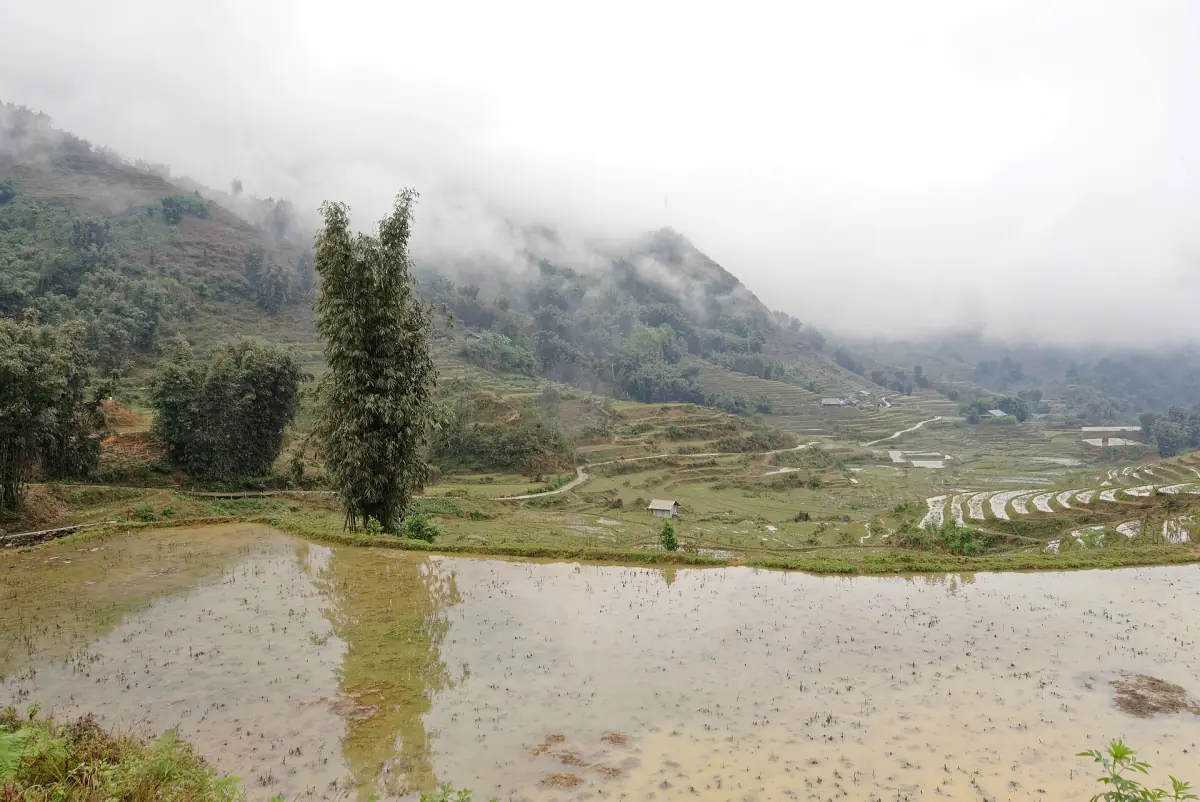
Sapa climate table
Average daily high, average daily low and average total rainfall per month at the Sa Pa station. Temperatures in °F with °C in parentheses, rainfall in inches with millimeters in parentheses.
| Month | Average high | Average low | Rainfall |
|---|---|---|---|
| January | 54 °F (12.3 °C) | 43 °F (6.2 °C) | 2.8 in (70.2 mm) |
| February | 58 °F (14.3 °C) | 46 °F (7.8 °C) | 2.9 in (73.5 mm) |
| March | 65 °F (18.2 °C) | 51 °F (10.8 °C) | 4.1 in (104.5 mm) |
| April | 70 °F (21.3 °C) | 57 °F (14.0 °C) | 8.4 in (213.3 mm) |
| May | 72 °F (22.4 °C) | 61 °F (16.3 °C) | 13.4 in (340.6 mm) |
| June | 73 °F (22.9 °C) | 64 °F (17.6 °C) | 15.0 in (381.4 mm) |
| July | 73 °F (23.0 °C) | 64 °F (17.7 °C) | 18.1 in (461.0 mm) |
| August | 73 °F (23.0 °C) | 63 °F (17.4 °C) | 17.8 in (451.9 mm) |
| September | 71 °F (21.7 °C) | 61 °F (15.9 °C) | 11.9 in (303.1 mm) |
| October | 66 °F (19.0 °C) | 57 °F (13.7 °C) | 7.9 in (201.3 mm) |
| November | 61 °F (16.1 °C) | 50 °F (10.2 °C) | 4.2 in (106.3 mm) |
| December | 56 °F (13.2 °C) | 45 °F (7.0 °C) | 2.6 in (65.7 mm) |
The standard prints an annual total of 2,779.6 mm (109.4 in). The twelve monthly values above add up to 2,772.8 mm (109.2 in), a small difference that comes from the source table itself. July is the wettest month and December the driest.
Sapa tours and treks
Guided treks, village visits and Fansipan trips from Sapa, with live prices and availability.
What each season is like
Based on the monthly averages in the table above.
Winter, December to February
Average highs are 54 to 58 °F (12.3 to 14.3 °C) and average lows 43 to 46 °F (6.2 to 7.8 °C). Rainfall is low compared with summer, but amounts are not the same as wet days: the standard counts 16.3 rain days in January and 13.5 in December. Expect damp, cloudy days as well as clear ones. The national park authority describes cold winters with temperatures at times below 0 °C (32 °F), ice and snow in the park. That is not a promise of snow in town on a given date.
Spring, March to May
Warming up: average highs rise from 65 °F (18.2 °C) in March to 72 °F (22.4 °C) in May. Rain also climbs fast, from 104.5 mm in March to 213.3 mm in April and 340.6 mm in May.
Summer, June to August
The warmest and wettest months. Highs stay near 73 °F (23 °C), nights are around 63 to 64 °F (17.4 to 17.7 °C), and monthly rainfall is between 381 and 461 mm. Trails can be slippery, and the UK government lists floods, swollen rivers and landslides among the hazards in the mountains.
Autumn, September to November
Rain falls month by month: 303.1 mm in September, 201.3 mm in October and 106.3 mm in November. Average highs go from 71 °F (21.7 °C) to 61 °F (16.1 °C), and November nights drop to 50 °F (10.2 °C).
Best time to visit Sapa
The national tourism board points to September to November and to the milder spring from March to May. That is a general recommendation, not a guarantee of clear views on a given day. In the table, November and March are the driest months within those two windows, while April, May and September are noticeably wetter.
The rice terraces change through the year. An operator report from late August 2026 already described ripe, golden fields. Timing is not the same in every village and varies from year to year, so do not count on golden terraces in a specific week of October.
- For trekking, plan for dry trail days and keep a buffer in your schedule.
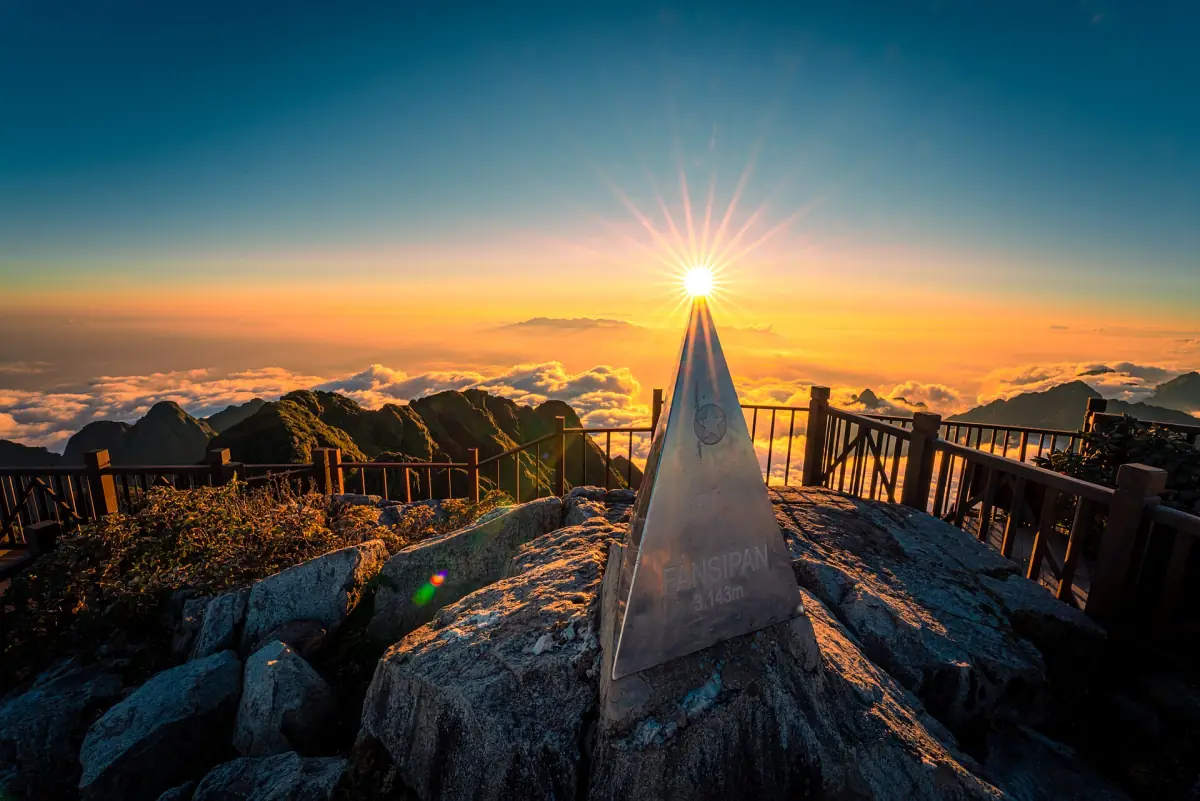
- For the Fansipan cable car, the operator lists opening hours of 07:30 to 17:00, which can change. Check on the day, and read our Fansipan guide.
- A dry forecast for town does not guarantee a clear view from the summit, so keep a spare day if you can.
What to pack
Pack for temperature swings and for rain at any time of year.
- Layers: a warm fleece or jacket for evenings and a light shirt for the walk.
- A waterproof jacket or poncho, even outside summer.
- Shoes with grip for wet trails and village paths.
- Warmer clothing for the winter months, when January lows average 43 °F (6.2 °C). Heating in lodgings is not something to count on, so ask when you book.
- A dry bag or plastic cover for your phone and camera.
For choosing a base, see where to stay in Sapa. For walks in the valley, read about Sapa trekking and the Muong Hoa Valley, and for the road trip in the far north, the Ha Giang Loop.
Combining Sapa with the coast
Many trips combine the northern mountains with the coast, which has its own climate. For a boat trip on the bay, see the weather page for Ha Long Bay. If you plan to continue to central Vietnam, there is a guide to the weather in Hue.
Sapa weather: frequently asked questions
What is the best month to visit Sapa?
The national tourism board suggests September to November and March to May. In the climate table, November and March are the driest months in those windows. No month guarantees clear weather.
Does it snow in Sapa?
The park authority describes cold winters in the national park with temperatures at times below 0 °C (32 °F), ice and snow. That does not mean snow in town every year or on a particular date, so do not plan around it.
Which month is the wettest?
July, with an average of 461 mm (18.1 in), followed by August with 451.9 mm (17.8 in). December is the driest month with 65.7 mm (2.6 in).
Is winter dry?
Rainfall totals are low, but there are still many wet days. The standard counts 16.3 rain days in January and 13.5 in December, so expect damp, cloudy weather.
How cold does Sapa get at night?
In January the average low is 43 °F (6.2 °C) and in July about 64 °F (17.7 °C). Individual nights can be colder than the averages.
Are the figures live or a forecast?
No. They are long-term monthly averages from a government climate standard. Check a current forecast before you travel.