The Muong Hoa Valley at a glance
Sapa sits at the head of a deep valley cut into the mountains. Its slopes are terraced for rice, and the villages along the valley floor are what most people mean when they talk about trekking from Sapa. The best known are Lao Chai and Ta Van.
Ta Van is described as a village in the terraced valley with Giay, Hmong and Dao communities, roughly 7.5 miles (12 km) from the center of Sapa. Distances vary with the route, and no single figure fits every homestay. The Muong Hoa train is a different thing: it is the local rail link to the Fansipan cable car, not a way to see the valley. Our Fansipan page explains it.
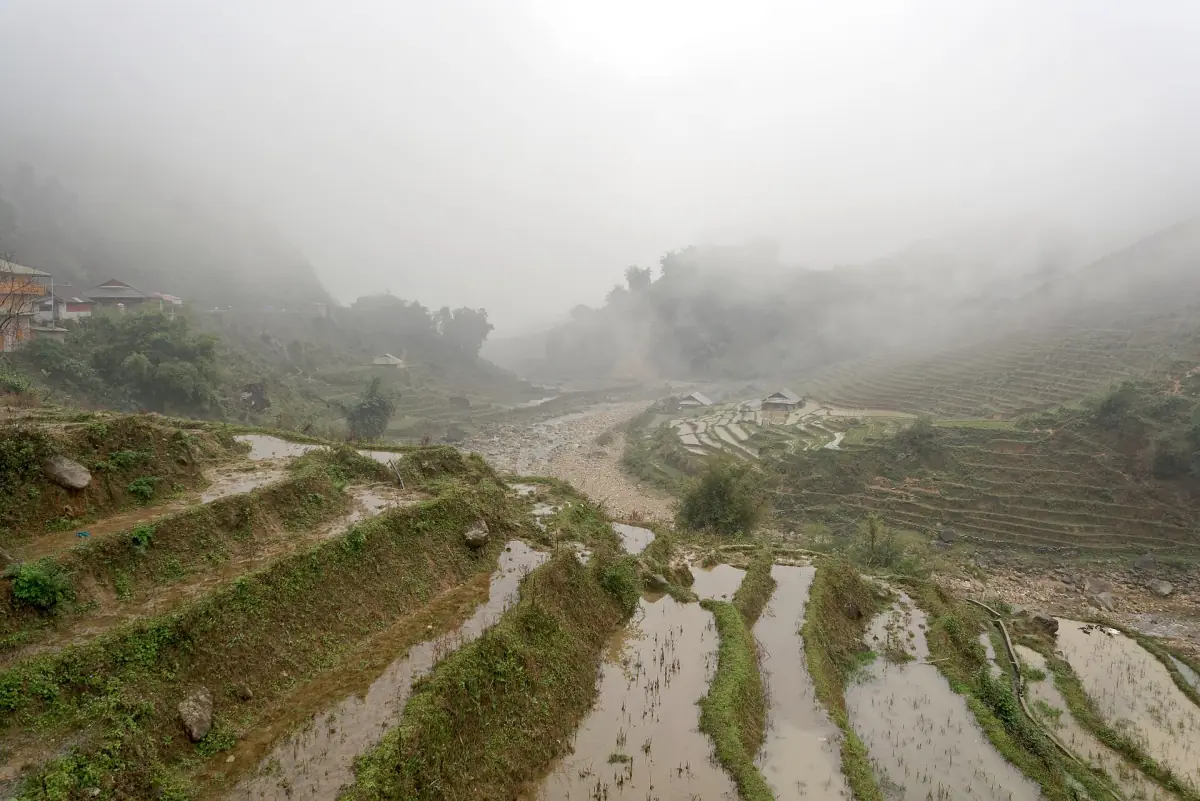
Rice terraces through the seasons
Sapa rice terraces are the reason most visitors come. What you see depends on the month and even on the village.
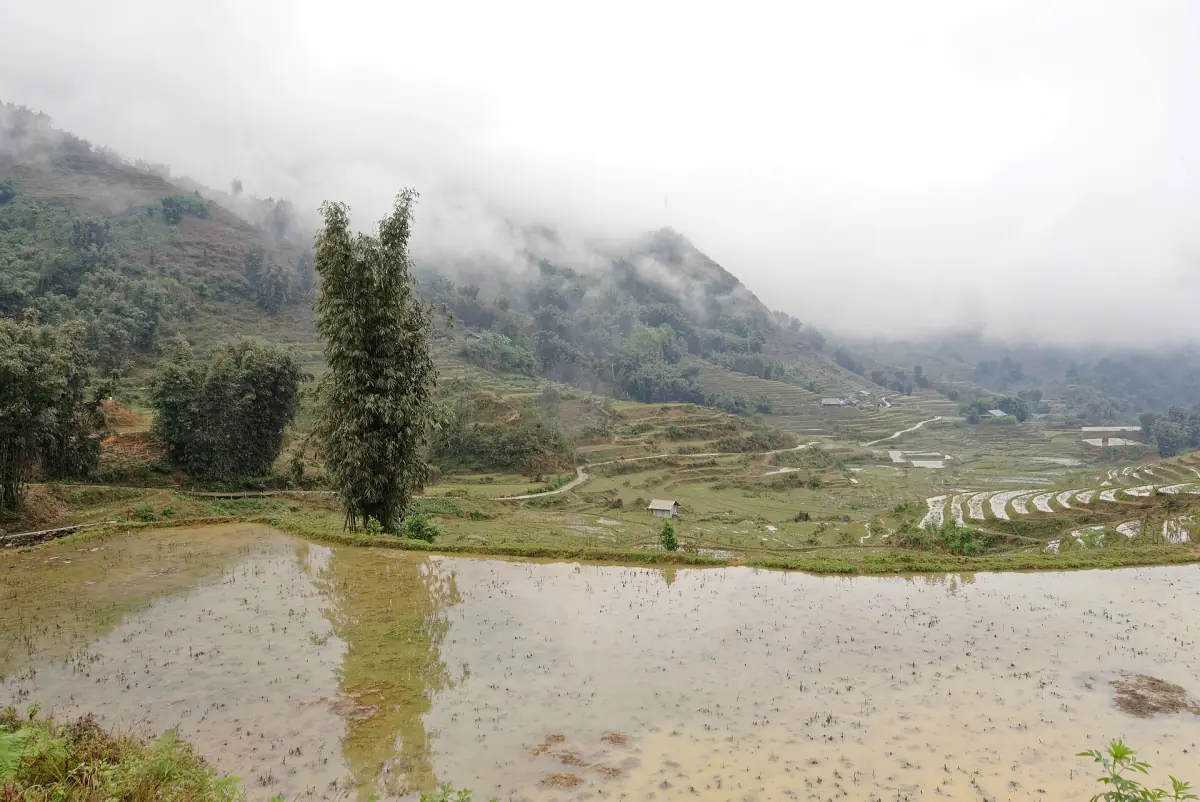
Flooded terraces
Terraces that hold water reflect the sky. Planting and irrigation do not happen on the same day in every village.
Golden terraces
One operator reported ripe, golden rice in late August 2026. Do not count on gold in a particular week.
Cloud and mist
Lao Chai under low cloud looks very different from a clear day. Mist can also hide the view for hours.
The national tourism authority points to September to November and to the milder spring months of March to May as the better times for Sapa in general. That is guidance, not a guarantee of sun or color. Sowing, flooding and harvest are not on one shared calendar, so a village a few valleys away may be at a different stage. The weather page has monthly averages.
Our picks: Muong Hoa Valley
A short village walk or a full day of trekking.
Hand-picked tours, booked through GetYourGuide. Prices are indicative starting prices in US dollars (as of October 2026). Tap a tour for live availability and the current price in your currency.
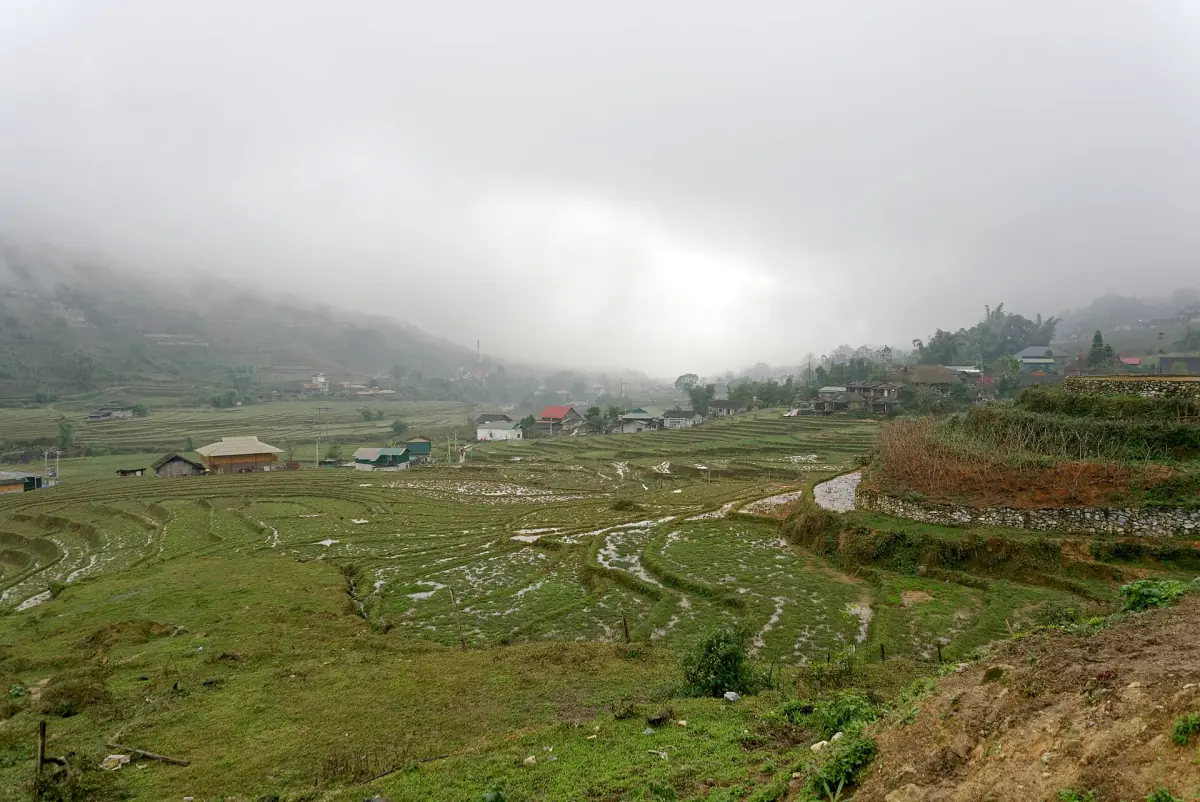
Full-day trek through the valley and villages
An English-speaking guide, village entry fees, lunch, water and the ride back to Sapa are included. Tips are extra, and other guide languages cost more.
Check availability →Muong Hoa Valley without a long hike
A valley panorama, a 2 km village walk through Lao Chai and Ta Van, a guide, a Dao herbal foot bath and a café drink. It does not include the long 12 km hike.
Check availability →Muong Hoa Valley tours and treks
Walks through Lao Chai and Ta Van, from short village visits to guided treks, with live prices and availability.
Lao Chai and Ta Van on foot
The classic route follows the valley from Lao Chai towards Ta Van. How far you walk is your choice. One local operator describes its standard trek as 12 to 15 km (7.5 to 9.3 miles) a day and about 5 to 6 hours on foot, with lighter and harder versions arranged individually. Many people do a day walk and return to Sapa by transfer. Others stay a night in the valley.
You do not need a guide for every village visit. The national tourism authority names Cat Cat and Ta Phin as villages you can visit without one, and our Cat Cat page covers the first. For the valley, a guide is still useful for finding the paths, for reaching a family homestay and for explaining what you are looking at. Whether you hire one is up to you.
Terraces are working fields. Stay on the path, do not step on walls or rice, and do not assume you may cross a private field. Wet clay and steep steps are slippery, so shoes with grip matter more than anything else you pack.
Fees and example prices
Published information on valley fees disagrees. Confirm what you are paying for before you walk in.
| Item | What is published |
|---|---|
| Ta Van entry, adult | VND 75,000 (2025) |
| Ta Van entry, child | VND 50,000, free under 1 m (2025) |
| Lao Chai to Ta Van route | Described as free in another 2026 listing |
| Day hike with a private guide, 1 / 2 / 4 people | USD 55 / 45 / 39 per person (listed October 2026) |
| 2 days, 1 night, 1 / 2 / 4 people | USD 130 / 98 / 85 per person (listed October 2026) |
The guided prices are one local operator's own rates for private tours, not a standard guide tariff. For the overnight trek the operator lists an own guide, lunch, valley entry, return transport to Sapa, a shared homestay room, dinner and breakfast. Getting to and from Sapa, drinks and personal costs are not included. Because that operator includes a valley entrance fee, a booked tour may already cover what a walker would pay at the village. Ask your guide or host.
Staying in the valley
The valley has family homestays and some private bungalows. In one operator's program, a homestay usually means a shared sleeping room upstairs, while the bungalows in Ta Van have a private bathroom. The setup differs from house to house, so ask about beds, bathrooms and heating when you book. Transfers close to a homestay can often be arranged, but a car does not reach every door.
Our where to stay in Sapa page compares the town, the valley and homestays. Multi-day routes are on the trekking page.
Northern Vietnam has more to see after the mountains. Ha Long Bay and Cat Ba island are the usual coastal add-ons, each with its own guide.
Safety and respect
Valleys and mountain roads here are exposed to floods and landslides in heavy rain. The UK Foreign Office advises checking the weather, using reputable operators and carrying insurance that covers your activity. Before you go, ask your accommodation about the current state of the path and of the road you will use.
You are walking through farmland and a place where people live. Ask before you photograph anyone, do not photograph children, and do not give them sweets or money. A greeting and a smile open more doors than a camera does. Buy a drink or a meal in the village if you stop for a long rest.
Muong Hoa Valley: frequently asked questions
When are the Sapa rice terraces golden?
One operator described ripe, golden fields by late August 2026. Timing differs by village and by year, so there is no safe date to book around. Flooded fields and green rice are also worth seeing.
Do I need a guide for the Muong Hoa Valley?
Rules can differ from path to path. A guide helps with route finding, homestays and context. Ask about local conditions either way.
Is there an entrance fee for Lao Chai and Ta Van?
Sources disagree. One lists VND 75,000 for adults at Ta Van in 2025, another calls the Lao Chai to Ta Van route free, and some tour prices include a valley fee. Ask before you pay and check what a tour covers.
How far is it from Sapa to Ta Van?
Roughly 12 km (7.5 miles) from the center of Sapa, though the walking distance depends on the route you choose.
Can I do the valley as a day trip?
Yes. Day walks from Sapa are a standard format, and one operator lists a private day hike from USD 39 to USD 55 per person depending on group size (October 2026). Overnight stays in homestays are the other option.
Is it safe to hike after heavy rain?
Be careful. Landslides and swollen streams are real risks in this area. Check the forecast and local advice, and postpone if paths are washed out.